
Help stop the spread of invasive plants and animals in our waters!
Invasive plants and animals block waterways, harm the environment and wildlife, and can damage your boat's engine and props. They can be small and hard to spot so are easily spread on damp equipment and clothing. Read more on plants and animals to look out for. Once established they become extremely difficult and expensive to eradicate, which is why it is so important to prevent their spread in the first place.
Protect the environment and sport you enjoy by keeping your kit free of invasive plants and animals.
Guidance for boaters
Whenever you leave the water, remember to Check Clean Dry

Check
Check boats, equipment and clothing after leaving the water for mud, aquatic animals, or plant material. Remove anything you find and leave it at the site. Reapply anti-fouling annually.

Clean
Clean everything thoroughly as soon as you can, paying attention to ropes, bilges, trailers and areas that are damp and hard to access. Use hot water if possible.

Dry
Drain water from every part of your boat and trailer before leaving the site. Dry everything for as long as possible before using elsewhere as some invasive plants and animals can survive for two weeks in damp conditions.
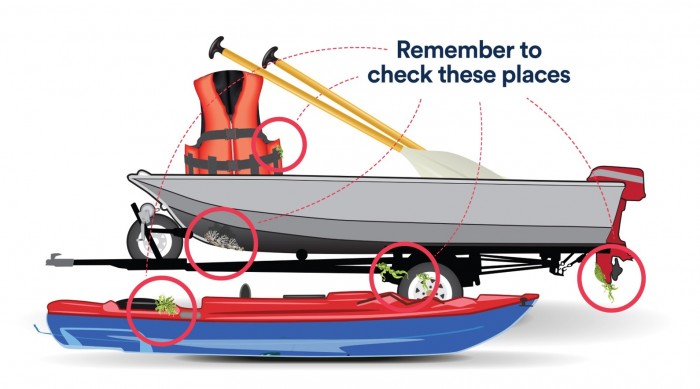
All recreational boat owners should also:
- Avoid sailing or paddling through patches of weed (which could contain invasive species). This can chop up plants and can spread them further.
- Be aware of the increased risk of bringing boats, trailers and equipment into GB from abroad.
- Be aware of the increased risk when placing a boat into a water body with particularly sensitive ecology, such as a nature reserve, Special Area of Conservation, or Marine Protected Area.
- Be familiar with local by-laws pertaining to biosecurity.
View more detailed guidance in the Recreational Boating Pathway Action Plan for Great Britain on the following:
- biosecurity for boat owners
- narrow boats and other boats that use canals
- hot water treatment for cleaning equipment
- antifouling
- in water cleaning of marine vessels
Going abroad?
It's even more important to Check Clean Dry if you're taking your kit abroad to make sure you don't bring any plants or animals back with you. Make sure everything is clean and has been dried thoroughly before you use it again at home.
Check Clean Dry materials
Download the materials below with this information to remind yourself and other water users to Check Clean Dry. Contact us to request free hard copies.
| Type of material | Check Clean Dry materials for anglers | HTML version for users of assistive technology | Welsh language version |
| Poster / sign |
|
|
Welsh boating poster (PDF) |
| Poster / sign | Welsh marine boating poster (PDF) | ||
| Poster / sign | Welsh boating on canals poster (PDF) | ||
|
Poster / sign |
Clubs and managers of waterbodies poster (HTML) | Welsh clubs and managers of waterbodies poster (PDF) | |
|
Leaflet |
Boating leaflet (HTML) | ||
|
Leaflet |
Welsh marine boating leaflet (PDF) | ||
|
Leaflet |
Welsh boating on canals leaflet (PDF) | ||
| Leaflet | Pocket fold out ID guide (HTML) | ||
| Sticker | Waterproof sticker (HTML) |
View a full list of Check Clean Dry materials.
Guidance for clubs
There are lots of actions for clubs to help protect the waters they use, why not share these with your boating club?
Guidance for event organisers
The risk of spreading invasive plants and animals to new water bodies is even higher at events and competitions, where participants could be unknowingly introducing them on their boat and kit, or taking them away to their usual boating spots. View the Boating Sustainable Event Toolkit and read more on actions for event managers.
Other ways to help stop the spread
If you would like to get more involved in protecting your watercourses from invasive non-native species you could:
- Join a Local Action Group working on invasive species management, or get involved in controlling floating pennywort through your sport.
- Look out for and record invasive non-native species online via iRecord or through a smartphone app. View free ID guides for over 60 species.
- Free online training is available in identification, recording and biosecurity.
Thank you for helping to protect the environment.
Our partners
Check Clean Dry is supported by the Aquatic Biosecurity Partnership with funding from water companies.
Visit the websites of our campaign partners for more information on boating: